Showing posts with label mark robson. Show all posts

Friday, 23 September 2022

The Seventh Victim (1943)

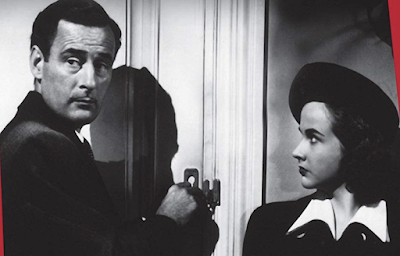
The directorial feature debut of Mark Robson, and the continuation of his working relationship with producer Val Lewton, The Seventh Victim is an odd mix of drama and what I couldn’t help viewing as very dark, and twisted, humour.

The plot focuses on Mary Gibson (Kim Hunter), a young woman who begins her own investigation when she is informed that her sister (Jacqueline, played by Jean Brooks) has gone missing. It isn’t long until Mary meets a few people who may be able to help her in her quest, including a psychiatrist (played by Tom Conway), a poet (Erford Gage), and a husband (Hugh Beaumont) she was previously unaware of. But where is her sister, and what has happened to her?

Like some other movies I have watched recently, The Seventh Victim is best appreciated by people who don’t bring their own expectations to it. The title may suggest a crime thriller (perhaps a serial killer movie) or something supernatural, but what you actually get is a framework that allows some time to be spent examining the power of faith, despite it being in a rather unusual context. This isn’t an unfamiliar topic to Lewton, of course, and you could argue that most of the movies he produced had that at the heart of them, but it’s a slightly less comfortable fit here, although everything still works well enough.

The script, by Charles O’Neal and DeWitt Bodeen, manages to take viewers through an ever-darkening corridor with enough light touches and breathing space to distract from the gloom and doom until reaching a rather bleak final destination. It’s just a shame that the ending isn’t at all satisfying, and the final scene feels more like a punchline than something effectively poignant.

Although Hunter, Conway, Gage, and Beaumont all do well in their roles, they also often feel as if they are starting in a different movie from the one in which a woman has gone missing, and is presumably in danger. Remove a couple of main scenes and you end up with a standard rom-com narrative here. Brooks, on the other hand, benefits from being the endangered woman, with her intermittent appearances creating either more mystery or more danger.

While not a bad film, this is easily the worst of the films I have seen produced by Lewton. It suffers from an identity crisis, as well as some plotting that never feels as tight and well-handled as it should be (especially when you consider the lean 71-minute runtime). I didn’t mind watching it, but I doubt I will ever want to rewatch it.

6/10

If you have enjoyed this, or any other, review on the blog then do consider the following ways to show your appreciation. A subscription/follow costs nothing.
It also costs nothing to like/subscribe to the YouTube channel attached to the podcast I am part of - https://www.youtube.com/channel/UCErkxBO0xds5qd_rhjFgDmA
Or you may have a couple of quid to throw at me, in Ko-fi form - https://ko-fi.com/kevinmatthews
Friday, 16 September 2022

Bedlam (1946)

Directed by Mark Robson, who co-wrote the screenplay with Val Lewton, Bedlam is a wonderfully dark and nasty piece of work. I don't know what people would have thought of it when it was first released, but I can understand it not finding an audience immediately. While tame in many respects nowadays, it somehow retains an impressive power, thanks in no small part to the sterling central performance from Boris Karloff.

Karloff plays Master George Sims, the man in charge of an insane asylum (there are many better ways to word that, granted, but I think bluntness here matches the tone of the film). Sims keeps himself in the good graces of Lord Mortimer (Billy House) by occasionally using the patients in his care to put on a distasteful show. Sims is used to doing what he wants, and he makes extra money by charging people to enter the asylum and look around, but he starts to come unstuck when his ways are questioned by Nell Bowen (Anna Lee). Nell is a companion to Mortimer, which means she may have the ability to convince him of how badly the asylum is run, and Sims has to think and act quickly. Nell won't be much of a threat to him if she ends up IN the asylum.

A sadly familiar tale nowadays, we have had many films showing authority figures abusing their position of power, Bedlam remains a prime example of this kind of film. It also remains a twisted and vicious piece of work, as well as a damning indictment of the way society tends to deal with the mentally ill. Things have greatly improved over the years, thankfully, but there are also ways in which people continue to be misdiagnosed, mistreated, and stigmatized.

Despite stiff competition, Karloff delivers a performance that could easily be considered among his very best. There’s no soft centre this time around. The monster is all monster here, and Karloff portrays every bit of merciless scheming without feeling the need to wink or reassure viewers. He is thoroughly unlikable in a way that keeps you riveted, and the fact that Lee does such a great job in her role as the “woman who won’t stay quiet” is testament to her performance. With a number of enjoyable supporting turns dotted throughout, a good dollop of praise should be heaped upon whoever was responsible for casting, and the consistency of quality means I would once again rather direct people to browse the entire cast list than try to single out any one other performance.

Robson and Lewton do everything that they set out to do, using their central premise to link together a number of dark and unforgettable grotesqueries. They know how to make the most of their assets (mainly Karloff and Lee) and they have confidence in their own abilities. That confidence is not misplaced, and I can happily recommend this to anyone who has already appreciated some of the other films featuring people who worked on this, whether behind or in front of the camera.

8/10

If you have enjoyed this, or any other, review on the blog then do consider the following ways to show your appreciation. A subscription/follow costs nothing.
It also costs nothing to like/subscribe to the YouTube channel attached to the podcast I am part of - https://www.youtube.com/channel/UCErkxBO0xds5qd_rhjFgDmA
Or you may have a couple of quid to throw at me, in Ko-fi form - https://ko-fi.com/kevinmatthews

Thursday, 1 September 2022

Isle Of The Dead (1945)

Although I have watched a number of the Val Lewton-produced films of the 1940s by now, I decided to review this one not so long after I Walked With A Zombie because it feels, in many ways, as if it covers familiar ground. It's overflowing with the usual atmosphere, of course, but at the heart of it is an examination of characters who disagree over the power of faith, with one particular individual seemingly happy to do make themselves look bad if it benefits the greater good.

Boris Karloff is General Nikolas Pherides, a man who visits the "Isle Of The Dead" to pay respects to his dead wife. He is accompanied by a reporter (Oliver Davis, played by Marc Cramer). Discovering the grave site has been disturbed, Pherides and Davis eventually wander through different parts of the island, ending up at the household of Dr. Aubrecht (Jason Robards Sr.), who also has the company of his housemaid (Madame Kyra, played by Helen Thimig), a visitor named St. Aubyn (Alan Napier), his poorly wife (Mary St. Aubyn, played by Katherine Emery), and their young companion, Thea (Ellen Drew). There are one or two others also packed into this one household, but these names make up the main group. Unfortunately, all end up quarantined when one of the guests dies from what a doctor diagnoses as the plague. Can everyone hold out, stay safe, and wait for quarantine to be over? Or will they remain in danger until they get rid of the vorvolaka (a malevolent demon in human form) in their midst? Most people don't believe in the vorvolaka, but Madame Kyra does, and she intimates to Pherides that she suspects Thea.

Written mainly by the talented Ardel Wray, Isle Of The Dead is a character study, an examination of the hold that folklore can have over some people, and essentially a battle between faith and science. The scenario allows neither side an obvious path to victory, but that does nothing to dim the belief of anyone hoping against all hope that they will be helped by the system they support.

Director Mark Robson has everything he needs to help make this a cracking little yarn. The script is solid, and has one or two genuinely creepy moments amidst the plague drama, the production design and set dressing is superb (allowing the locations to feel 100% real throughout), and there’s an absolutely fantastic performance from Karloff at the heart of it, a man who can steel himself to do what others would find unpalatable, to say the least.

Although there is ample screentime for both Cramer and Drew, the younger members of the group who end up trapped and in danger, and you also have some scene-stealing from Thimig and Emery, the two women causing tension in very different ways, this is a film that belongs to Karloff. When he is onscreen he is magnificent, but he also casts a lengthy shadow that slows you to feel his presence for many moments that don’t have him front and centre.

Clocking in at about 70 minutes, this is another lean chiller that does everything it wants to do, setting things up quickly and then allowing for a really interesting middle section before the resolution starts to play out. Although not mentioned half as often as some other great titles from this time, Isle Of The Dead deserves a hefty serving of praise and recognition. It’s a fantastic little film, and I hope others find it, or (for those who found it way before I did and are currently rolling their eyes at my standard tardiness) I hope people keep recommending it alongside the more commonly-mentioned titles in this category.

8/10

If you have enjoyed this, or any other, review on the blog then do consider the following ways to show your appreciation. A subscription/follow costs nothing.
It also costs nothing to like/subscribe to the YouTube channel attached to the podcast I am part of - https://www.youtube.com/channel/UCErkxBO0xds5qd_rhjFgDmA
Or you may have a couple of quid to throw at me, in Ko-fi form - https://ko-fi.com/kevinmatthews

Thursday, 7 July 2022

The Ghost Ship (1943)

I promise you that, despite the wild news cycle we are currently going through here in the UK, the timing of this review, concerning a movie that shows an unfit leader who clings to his power while becoming more and more obviously dangerous to those around him, is completely coincidental. I enjoyed this film last week, days before the current, joyous, political bloodbath that should end with Boris Johnson no longer being Prime Minister.

It’s very appropriate that this is a film I have to review by starting off with talk of coincidental similarities elsewhere, because it is the film that was hidden away for many years due to a plagiarism lawsuit that was lost by a devastated Val Lewton, the producer on this. Nobody who was aware of the full facts of the case, and who knew of the fertile imagination and creativity of Lewton, ever saw the lawsuit result as fair, but that is beside the point. The end result was a huge blow for Lewton, and it meant The Ghost Ship was kept away from viewers for a few decades.

Clocking in at just under the 70-minute mark, this is the story of 3rd Officer Tom Merriman (Russell Wade), a newcomer to a ship helmed by Captain Stone (Richard Dix). Stone seems nice and friendly enough, initially, but it soon becomes clear that he has some bad habits. He always has an excuse to avoid responsibility, he never wants to admit when he is in the wrong, and he deems himself able to decide the ultimate fate of anyone working under him. Merriman realises all of this a bit too late, after a death that he doesn’t think is as accidental as it could seem, but his attempt to confront the Captain don’t go well. Nobody else is privy to the information that Merriman has, making him seem more illogical and unhinged as he grows more desperate to make people see the truth.

Based around a ship set that was available for use, this tale, credited to Leo Mittler for the story and Donald Henderson Clarke for the screenplay, is another superb slice of commentary-smuggling entertainment that Lewton was excelling at during this time. Pushing back against the expectations of the movie title, as usual, what could have been a standard chiller is instead crafted as an intriguing character study, showing the damaging effects of too much power being conferred upon one individual, and the way in which a bad situation is compounded by people being silent/complicit while they try to make the most of their own circumstances.

Director Mark Robson, given a chance to step up after his editing work on Cat People, has a good grasp on the material. Okay, it isn’t all shadows and scares, but there is still a growing aura of menace as our hero tries to share uncomfortable truths in a situation that becomes increasingly dangerous for him.

Wade is a decent lead, essentially coming across as a stand-up guy who will only rock the boat (no pun intended) when he feels it is absolutely necessary. His performance is nicely settled in a happy medium, being neither too passive nor too hysterical as he constantly weighs up the fluid dynamics of each interaction he has, with Stone and the other crew members. Dix is excellent, lending his character a real shade of the monstrous, barely hiding his true character at the start of the film while unabashedly showing everything horrid about him during a third act that escalated things beautifully. Many supporting cast members do good work (including Edith Barrett, Lawrence Tierney, Ben Bard, the “mute” Skelton Knaggs, and the musical Sir Lancelot), but the other real standout is Edmund Glover, playing a radio operator who knows just about enough to suspect Merriman may be telling the truth. Glover is allowed to be a fun presence during the first half and a potential ally throughout the second half.

Things may seem to get a little bit silly during the final act, and it’s a shame that some characters don’t get to make more of an impression, but there’s little else to fault here. Unless you go into it wanting an actual ghost ship. In fact, it’s almost comforting knowing that people will eventually restrain and remove a leader who has gone mad and will do anything to maintain their position of power. Don’t you think?

8/10

If you have enjoyed this, or any other, review on the blog then do consider the following ways to show your appreciation. A subscription/follow costs nothing.
It also costs nothing to like/subscribe to the YouTube channel attached to the podcast I am part of - https://www.youtube.com/channel/UCErkxBO0xds5qd_rhjFgDmA
Or you may have a couple of quid to throw at me, in Ko-fi form - https://ko-fi.com/kevinmatthews
Or Amazon is nice at this time of year - https://www.amazon.co.uk/hz/wishlist/ls/Y1ZUCB13HLJD?ref_=wl_share