Showing posts with label bill duke. Show all posts

Friday, 23 January 2026

American Gigolo (1980)

"What are you doing this evening?" my partner asked me.

"Watching a prime slice of sexy Richard Gere in glorious 4K," I replied.

"Ewwwwww, he's not sexy," she then said.

"Many would disagree with you. Especially in the 1980s," I told her. 

Whether you view Gere as a sex symbol or not, and it's hard to argue with his possession of that status for at least a number of years, American Gigolo is a film that has writer-director Paul Schrader firmly in the "he definitely is a sex symbol" camp. And the way he films his star, it's hard to disagree. Unless you're my partner, I guess.

It's embarrassing that I took so long to get around to this that I reviewed another Paul Schrader movie, The Walker, a few years ago, describing it as a film that may not be too similar to other Schrader films. The Walker is about a male escort who finds himself mixed up in a murder. I didn't really like it. American Gigolo, as many are already aware, is about a male escort who finds himself mixed up in a murder. I really liked it.

Gere plays Julian, a classy escort who wears all the right clothes, has all the right moves, and says all the right things to keep his clients happy. His life starts to get a bit complicated when he starts a relationship with Michelle (Lauren Hutton), the wife of a senator. It's complicated further when a client turns up dead, bringing him to the attention of Detective Joe Sunday (Hector Elizondo). But at least his life is soundtracked by Giorgio Moroder and a repeated Blondie track.

While it's obviously a bit dated nowadays, American Gigolo feels as if it was always a magical blend of the cool and the uncool. Gere is suave and sexy, his life is full of great accessories and treats, but he's also surprisingly emotionally available for many of his clients. He's shown as a very capable man, but is also rendered useless as he becomes more and more tangled in a web that could lead to him serving some serious time in prison.

A lesser film in comparison to the others that Schrader directed between the late 1970s to mid-1980s, it's still an interesting way to make use of some of his usual themes with material that feels more "sellable" than some of his other works. The runtime - just under two hours - passes by quickly enough, and the stars have enough fun to ensure that nothing ever gets too grim and unenjoyable. It's a bit lacking in depth, but that's in line with the world that viewers are shown around, which makes it a nice marriage of content and form.

Gere enjoys a few iconic moments, something that he did remarkably well in his biggest cinema hits, and Elizondo is an entertainingly tenacious, but generally polite, detective. There's also a fantastic turn from Bill Duke, playing a pimp named Leon. Hutton is lovely in the role of Michelle, Carole Cook and K Callan are two other women who get to enjoy Gere's company when the opportunity presents itself, and Nina van Pallandt is very good as the woman who connects our lead with the women who want to, well, connect with our lead.

The Moroder music helps, but the big plus is Gere being able to anchor the film with what would most commonly be referred to nowadays as BDE. It all depends on how you feel about him though. I'm a fan, especially when he's used as well as he is here. My partner, on the other hand, is not. 

8/10

If you have enjoyed this, or any other, review on the blog then do consider the following ways to show your appreciation. A subscription/follow costs nothing.
It also costs nothing to like/subscribe to the YouTube channel attached to the podcast I am part of - https://www.youtube.com/channel/UCErkxBO0xds5qd_rhjFgDmA
Or you may have a couple of quid to throw at me, in Ko-fi form - https://ko-fi.com/kevinmatthews
Or Amazon is nice at this time of year - https://www.amazon.co.uk/hz/wishlist/ls/Y1ZUCB13HLJD?ref_=wl_share 

Monday, 1 May 2023

Mubi Monday: The Limey (1999)

A very familiar tale of a tough crook visiting somewhere to avenge the death of a young loved one (it's impossible to watch The Limey without feeling that it's under the large shadow cast by Get Carter for most of the runtime), this stands out from many other modern gangster movies for three main reasons. There's the script by Lem Dobbs, the direction by Steven Soderbergh, and, arguably the most important component, a central role for Terence Stamp that allows the film-makers to reference his past via a few well-chosen film clips from the earlier years of his filmography.

Stamp plays Wilson, an Englishman who turns up in L.A. to find the man he figures is responsible for the death of his daughter (Melissa George, shown in flashback, in a non-speaking role). He befriends Ed (Luis Guzmán) and Elaine (Lesley Ann Warren), two people who knew his daughter while she was living in that area, and starts to doggedly pursue a man named Valentine (Peter Fonda). It's pretty clear to him that Valentine caused the death of his daughter, but Valentine is always being protected, by a number of armed goons, as well as his right hand man/head of security (Avery, played by Barry Newman). It soon becomes clear that there may not be enough protection available to him though, Wilson is moving ever closer to him like an unstoppable force.

Although I used to own this movie a few years ago, I never got myself in the mood to sit down and watch the thing. As controversial a statement as it may be, I have never been the biggest fan of Stamp (his wonderfully menacing, and yet also slightly camp, turn as General Zod aside). I haven't actually seen many of his films though, including Poor Cow (which is the film used here to show Stamp in his youth). I should probably make time for Billy Budd,  The Collector, and something like The Mind Of Mr. Soames (especially after enjoying his mesmerising turn in Theorem, which I coincidentally caught on the same day I watched this). Anyway, as everyone else already knows, Stamp certainly has something that makes him very watchable onscreen, and he's a superb choice for the lead role here, even if his performance seems to border on the parody at times, in terms of his full-on cockney speaking style that some other characters struggle to decipher.

As well as Stamp, you get superb supporting turns from Guzmán, Warren, and Newman, as well as one superb scene for the brilliant Bill Duke. George is shown in dreamy visions, and I always like to see her onscreen (although it would have been nice to have more of her, despite her probably being saved from trying to attempt a cockney accent). Amelia Heinle is also a welcome presence, playing Adhara (a new female companion spending time with Valentine). The weak link is Fonda, who is arguably often picked for film roles based on his name and legacy ahead of his actual acting talent. He's just not very good, and that's all the more obvious when he's in conversation with the excellent Newman, who is the first one to realise how dangerous Stamp's character is.

The script by Lem Dobbs is quite relaxed and free-flowing, complemented by Soderbergh's usual low-key approach to the material. Cross-cutting, fantasy sequences, and jittery chronology abound, and there's plenty of sequences that have characters speaking over imagery that either adds some emotional resonance to what is being said or delivers some extra information, either about the history of the characters or the planned revenge. And I don't think I need to mention how good the Cliff Martinez score is.

The Limey lacks something though. Or, I should say, that I thought The Limey lacked something. Until the very last scenes. And that's when it all clicked into place. This isn't just a blend of cinema style and grim nihilism, and it's not just a slice of cool for an elderly Stamp to show how easily he can still strut his stuff. It's actually a look at what can happen when an ever-moving individual full of a drive for revenge realises that the target he is pursuing may show him a refracted reflection of his own past. That's when I was completely won over by it. Having fairly enjoyed most of the journey, the final destination was the undoubted highlight.

8/10

If you have enjoyed this, or any other, review on the blog then do consider the following ways to show your appreciation. A subscription/follow costs nothing.
It also costs nothing to like/subscribe to the YouTube channel attached to the podcast I am part of - https://www.youtube.com/channel/UCErkxBO0xds5qd_rhjFgDmA
Or you may have a couple of quid to throw at me, in Ko-fi form - https://ko-fi.com/kevinmatthews

Thursday, 24 November 2022

Noirvember: Payback (1999)

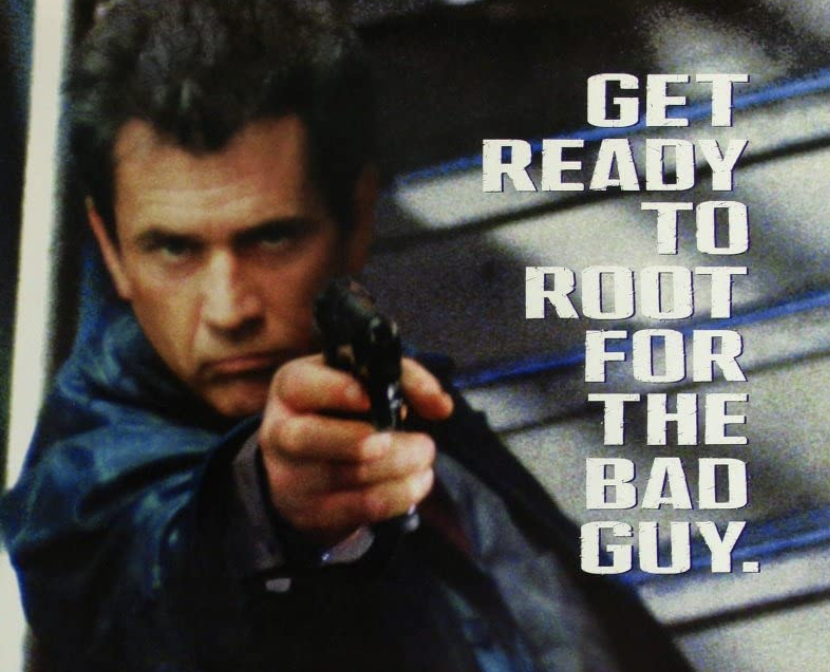
An enjoyable remake of Point Blank (well, a retelling of the tale that Point Blank was based on anyway), featuring Mel Gibson in the lead role of the wronged man out for revenge, and his half of a criminally-acquired stash of money, Payback is a rough ‘n’ tough bit of entertainment that tries to stand out from the crowd by having more ruthless behaviour and bursts of violence than you might expect from a film with such a big star name attached.

Gibson is Porter, a man shot and left for dead after being betrayed during a job that also involved his wife (Deborah Kara Unger) and his best friend (Gregg Henry). Once he starts on his quest to get the money owed to him - not the full amount stolen, just his half - Porter soon finds himself in more and more danger as he has to approach increasingly powerful members of a large criminal organisation.

Directed, for the most part (the production wasn’t exactly smooth sailing), by Brian Helgeland, who also wrote the screenplay, subsequently reworked by Terry Hayes, it’s hard to see why people viewed this as something that needed rescuing. And when I say people I mean “Hollywood suits”. What is here isn’t for everyone, but the same could be said for Point Blank. The fact that the main character is such a shitty person makes it more interesting, especially when you realise that he still has a certain moral code that makes him one of the least shitty people in a world full of much bigger scumbags who inhabit the world he lives in.

Dialogue may not be sharp, and the dour colour palette isn’t exactly a big plus, but plotting is clear, characters are nicely sketched, and Helgeland does some excellent work, knowing what viewers need to see and what they don’t. The unfolding chain of events may be grim, but it’s also somehow still fun . . . right up until it isn’t. And when the fun stops, well, you know the ending is close. You just don’t know if it’s going to be a good or bad ending.

Helgeland helps himself a lot by casting such a great selection of faces. Gibson is great in the main role, doing the kind of tough and unpredictable schtick he could do in his sleep, and Henry has a knack for playing the kind of character you just know could double-cross you at any moment. Unger is sadly underused, but there are two excellent, and very different, turns from Lucy Liu and Maria Bello that more than make up for the brevity of her screentime. There are also roles for David Paymer, Bill Duke, William Devane (one of the most sorely-undercelebrated actors of his generation, in my view), James Coburn, and Kris Kristofferson, as well as one or two others you should recognise. I cannot single out any one of these actors for praise, but that’s because they all get to be equally brilliant at different times in the movie.

I really like this. It’s not as good as the original work it is based on, some better visuals and a more interesting blend of score and soundtrack could have helped (although the opening music from Chris Boardman, playing over the extended credit sequence, is superb), but I think it’s an enjoyably lean, mean, neo-noir that always seems willing to go one step further than viewers might expect. I recommend it.

8/10

If you have enjoyed this, or any other, review on the blog then do consider the following ways to show your appreciation. A subscription/follow costs nothing.
It also costs nothing to like/subscribe to the YouTube channel attached to the podcast I am part of - https://www.youtube.com/channel/UCErkxBO0xds5qd_rhjFgDmA
Or you may have a couple of quid to throw at me, in Ko-fi form - https://ko-fi.com/kevinmatthews

Tuesday, 8 November 2022

Noirvember: Deep Cover (1992)

Starting with a couple of scenes in a row that should startle any viewer, Deep Cover is a crime thriller/neo-noir directed by Bill Duke (a badass actor arguably best-known for his roles in a couple of prime Schwarzenegger action movies) that provides two brilliant roles for the lead actors. And when those lead actors are Lawrence Fishburne and Jeff Goldblum, both proving to be perfect fits in their roles, then it doesn’t take long to realise that you’re in for a fantastic time.

Fishburne plays Russell Stevens Jr, a cop who is deemed a perfect candidate for undercover work. If he hadn’t become a cop then he could have easily become a criminal. Quickly repaying the faith put in him, Russell soon works his way up the ranks of the drug-dealing organisation that he has been ordered to infiltrate. He ends up forming a strong bond with David Jason (Jeff Goldblum), a slick lawyer who has started to take on more and more work from his superior, Barbosa (Gregory Sierra). Unfortunately, Barbosa also seems to resent their success. 

Deep Cover isn’t interested in plausibility or reality. The central character is an undercover officer who commits various crimes, including murder, without regard for any attempts to remain within some recognisable moral framework that would show him to still ultimately be on the side of good. And yet, despite the slick movie moments and the brilliant thrills, there’s a strong core message about the ramifications of the drug trade, and how people are left with n a bad position by officials who can change their priorities, and allegiances, at the drop of a hat. As the misdeeds pile up, to put it mildly, it clarifies how far a good man is willing to go in order to effect some real change.

Duke directs well, helped by the fact that both leads are effortlessly cool and photogenic, and Michael Tolkin and Henry Bean give him a great script to work with. This may well be the best movie written by either man, despite a great variety of projects in their respective filmographies.

Fishburne and Goldblum are both on top form, and the film is energised by a middle section that allows some time for viewers to see a strong friendship between them. Sierra is easy to hate, a menacing figure overshadowing both the lead characters, but also an obstacle in the way of Fishburne’s character moving one more place up the ladder, and his network of cronies allows for some great little turns from Roger Guenveur Smith and Sydney Lassick. Clarence Williams III is excellent, playing a detective who keeps trying to help someone he just thinks is a regular drug-dealer who might still be able to get his life in order, and there are a couple of great moments feature James T. Morris and Alisa Christensen, a duo working in tandem to claim ownership of drug-dealing territory. Victoria Dillard is Betty, a young woman who is able to launder money, and she does good work, despite feeling as if her character is just there for Russell to take a shine to. And I cannot believe that I almost forgot to mention Charles Martin Smith, the man who almost steals the entire movie, brilliant as the cop in charge of the undercover operation, and the man responsible for giving the job to our “hero”.

Deep Cover has everything you could want from an early ‘90s crime thriller. The cast is a great mix of ascending talent and established faces, the pacing and dialogue are pretty perfect, the soundtrack is banging (as I believe the kids might say . . . joking here, but the soundtrack is genuinely excellent, complemented well by Michel Colombier’s score), and it never loses sight of what it’s really about, even if viewers temporarily forget it while being thrilled and entertained. The good is always there. It’s just obscured under deep cover.

10/10

If you have enjoyed this, or any other, review on the blog then do consider the following ways to show your appreciation. A subscription/follow costs nothing.
It also costs nothing to like/subscribe to the YouTube channel attached to the podcast I am part of - https://www.youtube.com/channel/UCErkxBO0xds5qd_rhjFgDmA
Or you may have a couple of quid to throw at me, in Ko-fi form - https://ko-fi.com/kevinmatthews

Monday, 15 October 2018

Mubi Monday: Mandy (2018)

Something a bit different this week, and something that keeps me on track with the horror element for the month. MUBI now has a MUBI Go feature, offering subscribers a cinema ticket to one film per week, subject to availability at your local cinemas. And this week they offered up Mandy. Well, it would have been rude to refuse the offer.

Panos Cosmatos made quite a name for himself with his feature debut, Beyond The Black Rainbow. I still haven't seen that film, despite all the praise heaped upon it, but I couldn't resist the pull of Mandy when it was sold to me as, essentially, Nicolas Cage angrily battling demons.

Cage lives with the woman he loves (Mandy, played by Andrea Riseborough) in a cabin in the woods. It seems to be an idyllic life they lead, with Cage working hard during the day so that he can relax and watch Nightbeast with his loved one in the evening. But that is all spoiled when an evil cult member spies Mandy and decides that he has to have her. So he sends some demon bikers along, which is when things start to get completely insane.

The first reason to see Mandy is the glorious visual style of Cosmatos. Almost every frame is painted like the lurid cover of some pulp sci-fi or fantasy novel. This is a landscape that feels like someone has blended the works of Michael Moorcock and Piers Anthony and then poured them directly onto the screen. It's a truly stunning feast for the eyes. Based on this, and from what I had heard already, I really do need to see Beyond The Black Rainbow ASAP. Cosmatos may not have churned out many movies but his quality over quantity approach means I can be fully caught up very quickly.

The second reason to see this movie is Nicolas Cage. The rest of the cast all do a good job (Riseborough is always pretty great, Linus Roache and Ned Dennehy are two of the main cult members, and you get fantastic small turns from Richard Brake and Bill Duke) but Cage is the one going through a transformation here, from simple man living in contentment to grief-stricken victim to, well, a weapon-wielding kind of demi-god. The shooting style helps to show this, as Cage becomes stronger and stronger on his quest for vengeance, culminating in some final scenes that I won't detail here. Let me just say that I would love to see his character able to reappear in some future film that develops him further.

Other reasons to see the movie include the lush score by the late Johann Johannson, a crazy Cheddar Goblin advert (a turning point for the whole movie, created by someone who helped make the viral hit "Too Many Cooks"), a sparse script that still manages to contain a number of chilling lines, and the fact that it's the best Hellraiser movie in almost two decades, even if it's not ACTUALLY an instalment of that franchise.

Well worth seeing on the big screen, you won't believe your eyes and ears. And you may well find yourself, as I did, eagerly awaiting a repeat viewing. It's an audio-visual experience that I can see myself wanting to have again and again and again.

9/10

A lot of people may want to buy the soundtrack here.
Americans can buy it here.


Wednesday, 28 September 2011

Exit Wounds (2001)

Steven Seagal is a goodie but he’s the bad kind of goodie who always goes off on his own and busts heads before thinking of the repercussions. For example, saving the Vice President by throwing him into a river isn’t really what anyone wants to see in the newspapers. Which is why Seagal is sent to a different precinct, somewhere a bit rougher where he can go through the fun of being the new guy again. DMX is a baddie but he’s a good kind of baddie, perhaps. He doesn’t seem to want to kill anyone and just wants to be left to buy his drugs in peace. Perhaps. The two men find themselves in a situation that involves a LOT of heroin and a LOT of corrupt cops. Oh, and a lot of great supporting actors.

Exit Wounds is a lot of fun. The script has a lot of humour throughout and the action beats are numerous and consistently entertaining. Andrzej Bartkowiak directs with a great energy, grounding things so that each fight move packs a punch but also adding an occasional over the top move just to make things cool.

Seagal plays the same kind of character he plays in almost every movie, he’s a cop with an attitude who just wants to get the bad guys, but he also goes along with the humour and this puts him in a much better light than usual (especially in a scene where he’s sent along to an anger management group). DMX does okay onscreen but I can never seriously evaluate the acting of someone who has named themselves after some kind of computer cable (?!?!?). Elsewhere, we get treated to a fantastic and eclectic cast. Isaiah Washington, Michael Jai White, Anthony Anderson, Bill Duke, Jill Hennessy, Tom Arnold, Eva Mendes and the ever-brilliant Bruce McGill. Something to please everyone, surely.

With a lively soundtrack and some great exchanges between Seagal and whoever he deigns to share the screen with at the time, this film remains one of many simple pleasures. The plot throws in a few big twists that nobody should be shocked by but, first and foremost, it sets out to keep you entertained from beginning to end. And it absolutely succeeds.

7/10 

If you have enjoyed this, or any other, review on the blog then do consider the following ways to show your appreciation. A subscription/follow costs nothing.
It also costs nothing to like/subscribe to the YouTube channel attached to the podcast I am part of - https://www.youtube.com/channel/UCErkxBO0xds5qd_rhjFgDmA
Or you may have a couple of quid to throw at me, in Ko-fi form - https://ko-fi.com/kevinmatthews
Or Amazon is nice at this time of year - https://www.amazon.co.uk/hz/wishlist/ls/Y1ZUCB13HLJD?ref_=wl_share