Arguably one of the most emotionally devastating animated movies of all time, Grave Of The Fireflies is the tale of a young boy (Seita) and his little sister (Setsuko) trying to survive during wartime in Japan. Their mother has been killed in a bombing raid, leaving them seeking shelter with a selfish and opportunistic aunt, and then moving on from there as they try to fend for themselves in an environment where everyone is too busy doing the exact same thing to spend more time trying to help vulnerable children.
Based on the short story by Akiyuki Nosaka, and adapted for the screen by director Isao Takahata, there's nothing in this movie that isn't grounded in the harsh realities of life during wartime when your home is the target of major attacks. Watching it is a stark reminder that few films really explore this side of war, with many preferring to throw us into the horrors of being on the field of battle (a double-edged sword that can both damn and inadvertently glorify the visceral experience of being a soldier in the thick of the action). It's understandable, those thrown into the fighting on the frontline are making one hell of a sacrifice, but looking at those left behind, especially those trying to survive as they live in the shadow of bombers, is an equally relevant way to show the repercussions of war, and how it impacts upon so many innocent lives.
Takahata doesn't make one wrong decision here, unless you want to criticise him for making everyone weep copiously as things play out. The animation is gorgeous, the script is grounded in a reality that could have been avoided by allowing the children to indulge in a few flights of fancy, and it's only the fact that it's not a live-action depiction of the events that makes it a bit more bearable (although there have been two different live-action interpretations, one in 2005 and one in 2008 - I haven't brought myself to give them a watch yet). What could have been a sweet and poignant film with all of the sharp edges rounded off is, thankfully, a sweet and poignant film with the conviction to simply show you the real horrors that two young children end up enduring and have faith that you will keep watching because you care about the characters enough.
Tsutomo Tatsumi and Ayano Shiraishi are both excellent as the two main characters, with the latter particularly moving as the weaker and younger child. Akemi Yamaguchi doesn't have many lines of dialogue, but she delivers them well enough, and they effectively illustrate her to be a bad person, either someone who has always been sharp and selfish or someone warped into that form by the war.
If there's one slight mis-step here, it's the decision to effectively start things off at the end. Mind you, that allows viewers to steel themselves against what is about to play out. This is no fairytale, war doesn't often have a happy ending for those directly in the line of fire, and Takahata ensures that you are ready to accept that, even if you don't really want to.
Beautiful, sweet, devastating, it's not one you'll want to revisit, but it's one that demands you eventually DO, whether you're reminding yourself of the power of it or introducing the film to those who have yet to cry their way through it.
10/10
Make yourself weep by buying the movie here.
Americans can be sad with this purchase here.
Showing posts with label japan. Show all posts
Tuesday, 14 January 2020
Thursday, 9 January 2020
Japanuary: Teketeke (2009)
Japan seems to have a wealth of both urban legends and traditional myths that can reach from past centuries to still affect, and unsettle, those living in the modern age. You have the modern creations, such as Sadako and Kayako, you have the enduring and creepy imagery of the slit-mouthed woman, and you have ghosts and ghouls around every corner. Which means that you can usually take a gamble on one of their horror movies and find something to like, whether that is a creepy atmosphere, an interesting legend, or some unsettling death scenes.
Usually. Teketeke has none of those things though, sadly, and is perhaps the biggest disappointment I have seen within the realms of Japanese horror in the last two decades.
The main story concerns the spirit of a woman who appears, moving along on her front hands as she is missing her legs, and then cuts people in half. If she doesn't get her victim there and then, the clock starts. She will get them three days later. She is also drawn to the colour red, looking to get rid of anything of that colour because she associates it with, well, that's part of the backstory that isn't for me to reveal here. The two main potential victims are a young woman named Kana (Yûko Ôshima) and her cousin, Rie (Mami Yamasaki), racing against time to figure out what they can do to save their lives, and being helped by a young man named Takeda (Shin'nosuke Abe).
Unbeknownst to me, this was the second movie I watched in just over a week that was directed by Kôji Shiraishi. The last one was A Slit-Mouthed Woman, which I was also disappointed by. That looks a lot better now, however, when compared to this one. There's absolutely nothing here that's done as effectively as it could be. Even the main figure, someone who could put you on edge as she creeps into view, is shot in such a way as to make it seem silly. Oh, it's a woman running into view on her hands. That's it. To make up for the low budget, things are never in focus, the editing is choppy, and you don't get one proper look at what should have been the star of the show.
These problems plague almost every scene. Deaths are unspectacular, although you get a decent splash of blood on most occasions, tension is non-existent, and the camerawork is just downright annoying. And there's nothing else to distract you from the negatives. The backstory isn't interesting enough, the investigation to discover it means we get many scenes that we're already familiar with, having seen them done better in more enjoyable movies.
Ôshima and Yamasaki do well in their roles, as well as can be expected anyway, and they manage to make an impression simply due to the fact that they're in peril for the second half of the runtime. And the runtime is brief, which is another bonus.
I really can't think of one reason why people would watch this. Which, despite my complaints, doesn't mean it is one of the worst horror movies out there. It's just no good when compared to the many other Japanese horrors that you could check out.
3/10
Usually. Teketeke has none of those things though, sadly, and is perhaps the biggest disappointment I have seen within the realms of Japanese horror in the last two decades.
The main story concerns the spirit of a woman who appears, moving along on her front hands as she is missing her legs, and then cuts people in half. If she doesn't get her victim there and then, the clock starts. She will get them three days later. She is also drawn to the colour red, looking to get rid of anything of that colour because she associates it with, well, that's part of the backstory that isn't for me to reveal here. The two main potential victims are a young woman named Kana (Yûko Ôshima) and her cousin, Rie (Mami Yamasaki), racing against time to figure out what they can do to save their lives, and being helped by a young man named Takeda (Shin'nosuke Abe).
Unbeknownst to me, this was the second movie I watched in just over a week that was directed by Kôji Shiraishi. The last one was A Slit-Mouthed Woman, which I was also disappointed by. That looks a lot better now, however, when compared to this one. There's absolutely nothing here that's done as effectively as it could be. Even the main figure, someone who could put you on edge as she creeps into view, is shot in such a way as to make it seem silly. Oh, it's a woman running into view on her hands. That's it. To make up for the low budget, things are never in focus, the editing is choppy, and you don't get one proper look at what should have been the star of the show.
These problems plague almost every scene. Deaths are unspectacular, although you get a decent splash of blood on most occasions, tension is non-existent, and the camerawork is just downright annoying. And there's nothing else to distract you from the negatives. The backstory isn't interesting enough, the investigation to discover it means we get many scenes that we're already familiar with, having seen them done better in more enjoyable movies.
Ôshima and Yamasaki do well in their roles, as well as can be expected anyway, and they manage to make an impression simply due to the fact that they're in peril for the second half of the runtime. And the runtime is brief, which is another bonus.
I really can't think of one reason why people would watch this. Which, despite my complaints, doesn't mean it is one of the worst horror movies out there. It's just no good when compared to the many other Japanese horrors that you could check out.
3/10
Labels:
horror,
japan,
kôji shiraishi,
mai nishida,
mami yamasaki,
takeki akimoto,
teketeke,
yamamoto kazuyoshi,
yûko ôshima
Sunday, 5 January 2020
Netflix And Chill: A Silent Voice (2016)
I hated most of my school years. Absolutely hated them. Schools are still pretty bad at being able to deal with bullying. Bullies are sly, their victims prefer to stay quiet. Telling teachers doesn't work, standing up to them can even lead to a fight which gets both of you in equal amounts of trouble, and you can't ignore a bully when they're in so many of your classes. Thankfully, you can mock them, you can get smarter than them, and you can eventually move from the area, build up your movie collection to an enviable amount, sit in your paid-up home, and mentally deliver a big fat "FUCK YOU" to all of those who helped to make your life an absolute nightmare for at least five years. Okay, that may be just me, but I am here to tell others that there is always hope. The weirdest thing about remembering those years, however, is remembering the times that I did the bullying. It happens. I still feel awful about it to this day. Trying to single out the kid who was a bit more different from the rest, trying to go along with a joke that was clearly making someone else miserable. Oh, they had dandruff (big deal), they weren't used to using deodorant yet (some people never learn, THAT'S when you need to address the issue), they were even poorer than I was, or they were just being far too annoying while also being physically weak, and therefore possibly beatable in a fight.
If you read that and I was ever involved in anything that made your life wretched and worse at an age when it should have been a lot easier just for us all to band together and battle through our education . . . please know that I am very sorry. I don't think I was ever a big threat to anyone, but I know (as much as I want to rewrite my own history) that I had some moments of being really shitty, for no other reason than to pass along the shittiness that I had been delivered by bullies.
I know, I know, you've once again stumbled on to a review here and wondered just what the hell I am wittering on about. Why this big tangent at the very start? Well, A Silent Voice is an imperfect film. The animation is nice, but not gorgeous. The characters, outwith the leads, aren't too memorable. The main story isn't really all that engrossing, in terms of how things ultimately develop en route to a third act. Yet it remains one of the best animated movies I have watched in some time, for one big reason. This film, more than any other, gives you an idea of the slippery slope of bullying, how easy it is to remain in that mindset, AND the ways in which bullying victims can continue to apologise and blame themselves for the actions of others.
The main strand of the narrative shows the relationship between Shoya and Shoko. Shoya is first shown planning a suicide attempt, and flashbacks show the life decisions that led him to that point, with the worst being his bullying of Shoko, a deaf girl first seen introduced as a new pupil at his school. As a youngster, Shoya really wasn't all that nice to some people, especially Shoka. But he improves as he gets older, although he moves through high school in an isolated and antisocial way, either deliberately keeping people away from him or assuming his past behaviour was already enough to cause them to want to avoid him. It's possible for people to change, especially moving from their younger years through their teens, and towards adulthood, but it can be a lot tougher when you consider the damage already caused to be irreparable.
Director Naoko Yamada has a decent selection of work in his filmography, from the look of things, but I am unfamiliar with anything else he has done (which is a lot of TV work, some OVAs, and less than a dozen movies). I may check out some of his other stuff one day, although I try to stick to individual movies rather than the wealth of episodic anime tales available out there, but the person who I need to remember from the list of credits here is writer Reiko Yoshida. He has a more extensive, and even more eclectic, filmography, and I am very interested in enjoying other tales from him, on the strength of his incisive work here, although perhaps I should also check out the source material by Yoshitoki Ōima.
The voice cast do well enough. Miyu Irino is the main voice for Shoya, Saori Hayami is the main voice for Shoko (although she says very few words, understandably), and the few other main voices are perfectly suitable, but the power of the film comes from the way it so beautifully illustrates different relationships and attitudes, rendering the vocal performances a distant second to the skillful visuals and artistic decisions.
Not everyone will get as much out of this. I am well aware that it resonated more strongly with me for a couple of different reasons (the spiral of self-loathing that motivates Shoya is also familiar to anyone who battles against depressive episodes). But I encourage everyone to give it a watch. Especially if, like me, you hadn't heard of it before.
8/10
If you have enjoyed this, or any other, review on the blog then do consider the following ways to show your appreciation. A subscription/follow costs nothing.
It also costs nothing to like/subscribe to the YouTube channel attached to the podcast I am part of - https://www.youtube.com/channel/UCErkxBO0xds5qd_rhjFgDmA
Or you may have a couple of quid to throw at me, in Ko-fi form - https://ko-fi.com/kevinmatthews
Or Amazon is nice at this time of year - https://www.amazon.co.uk/hz/wishlist/ls/Y1ZUCB13HLJD?ref_=wl_share
If you read that and I was ever involved in anything that made your life wretched and worse at an age when it should have been a lot easier just for us all to band together and battle through our education . . . please know that I am very sorry. I don't think I was ever a big threat to anyone, but I know (as much as I want to rewrite my own history) that I had some moments of being really shitty, for no other reason than to pass along the shittiness that I had been delivered by bullies.
I know, I know, you've once again stumbled on to a review here and wondered just what the hell I am wittering on about. Why this big tangent at the very start? Well, A Silent Voice is an imperfect film. The animation is nice, but not gorgeous. The characters, outwith the leads, aren't too memorable. The main story isn't really all that engrossing, in terms of how things ultimately develop en route to a third act. Yet it remains one of the best animated movies I have watched in some time, for one big reason. This film, more than any other, gives you an idea of the slippery slope of bullying, how easy it is to remain in that mindset, AND the ways in which bullying victims can continue to apologise and blame themselves for the actions of others.
The main strand of the narrative shows the relationship between Shoya and Shoko. Shoya is first shown planning a suicide attempt, and flashbacks show the life decisions that led him to that point, with the worst being his bullying of Shoko, a deaf girl first seen introduced as a new pupil at his school. As a youngster, Shoya really wasn't all that nice to some people, especially Shoka. But he improves as he gets older, although he moves through high school in an isolated and antisocial way, either deliberately keeping people away from him or assuming his past behaviour was already enough to cause them to want to avoid him. It's possible for people to change, especially moving from their younger years through their teens, and towards adulthood, but it can be a lot tougher when you consider the damage already caused to be irreparable.
Director Naoko Yamada has a decent selection of work in his filmography, from the look of things, but I am unfamiliar with anything else he has done (which is a lot of TV work, some OVAs, and less than a dozen movies). I may check out some of his other stuff one day, although I try to stick to individual movies rather than the wealth of episodic anime tales available out there, but the person who I need to remember from the list of credits here is writer Reiko Yoshida. He has a more extensive, and even more eclectic, filmography, and I am very interested in enjoying other tales from him, on the strength of his incisive work here, although perhaps I should also check out the source material by Yoshitoki Ōima.
The voice cast do well enough. Miyu Irino is the main voice for Shoya, Saori Hayami is the main voice for Shoko (although she says very few words, understandably), and the few other main voices are perfectly suitable, but the power of the film comes from the way it so beautifully illustrates different relationships and attitudes, rendering the vocal performances a distant second to the skillful visuals and artistic decisions.
Not everyone will get as much out of this. I am well aware that it resonated more strongly with me for a couple of different reasons (the spiral of self-loathing that motivates Shoya is also familiar to anyone who battles against depressive episodes). But I encourage everyone to give it a watch. Especially if, like me, you hadn't heard of it before.
8/10
If you have enjoyed this, or any other, review on the blog then do consider the following ways to show your appreciation. A subscription/follow costs nothing.
It also costs nothing to like/subscribe to the YouTube channel attached to the podcast I am part of - https://www.youtube.com/channel/UCErkxBO0xds5qd_rhjFgDmA
Or you may have a couple of quid to throw at me, in Ko-fi form - https://ko-fi.com/kevinmatthews
Or Amazon is nice at this time of year - https://www.amazon.co.uk/hz/wishlist/ls/Y1ZUCB13HLJD?ref_=wl_share
Labels:
a silent voice,
animation,
aoi yûki,
drama,
japan,
kiyoshi shigematsu,
miyu irino,
naoko yamada,
reiko yoshida,
saori hayami,
yoshitoki ôima
Saturday, 4 January 2020
Shudder Saturday: Ring 2 (1999)
It's no surprise that a hit as big as Ring got at least one sequel, as well as the remake, and the remake sequels, and I am not going to list all of the other connected movies. And it's no surprise that many people enjoyed Ring 2, considering how many of the cast and crew returned to work on it. What IS a bit of a surprise, certainly to me anyway, is just how much this sequel doesn't hold up nowadays, removed from that joyous time when so many of us were soaking up all of the J-horror that we could find.
Following on from the events of the first film, this time we are introduced to Mai Takano (Miki Nakatani), a young woman who is investigating the death of her boyfriend. His name was Ryûji, and viewers saw his last moments as well-dweller Sadako famously clambered out of a screen to ensure his death. Mai teams up with Okazaki (Yūrei Yanagi), a newsroom colleague of Reiko, the lead character in Ring, and the two embark on a journey that takes in more history of Sadako, a number of misjudged scientific experiments, and Reiko's son, Yôichi (Rikiya Ôtaka).
Perhaps the most interesting thing about Ring 2 nowadays is just how much it is guilty of sins that we are often quick to point out in mainstream American horror movies. You get much more backstory to the central evil, you get one or two set-pieces that pale in comparison to everything that was done in the first movie, and you even get (slight SPOILER WARNING) an ending that could be viewed as a much happier one than that of the original.
Director Hideo Nakata can do better than this. He has shown us, repeatedly, yet he seems to coast along here, perhaps too comfortable working with what essentially became a very successful brand that would find an audience due to name recognition alone, another common flaw with horror movie sequels. Although Hiroshi Takahashi still manages to throw a couple of decent moments into his screenplay (once again working with material established in the source novel, Ring, by Kôji Suzuki), neither he nor Nakata seem to be able to nail down everything they got right in Ring. That doesn't make this anywhere near an awful movie, it just renders it a big disappointment.
Nakatani and Yanagi are acceptable leads, working hard against a script that doesn't give them enough texture or warmth, and all of the supporting cast members do good enough work, but this is a film that would still satisfy in the simplest of ways if it delivered enough killer moments with the evil figure at the heart of it all. It doesn't.
Perhaps best viewed as one weak part of a relatively strong series (a notion I will confirm or deny for myself when I prioritise a revisit of Ring 0 in the next little while), Ring 2 is only worth prioritising if you're a completist, like myself. Otherwise, I can't think of any one part of it that makes it unmissable.
4/10
Get this lovely set here.
Following on from the events of the first film, this time we are introduced to Mai Takano (Miki Nakatani), a young woman who is investigating the death of her boyfriend. His name was Ryûji, and viewers saw his last moments as well-dweller Sadako famously clambered out of a screen to ensure his death. Mai teams up with Okazaki (Yūrei Yanagi), a newsroom colleague of Reiko, the lead character in Ring, and the two embark on a journey that takes in more history of Sadako, a number of misjudged scientific experiments, and Reiko's son, Yôichi (Rikiya Ôtaka).
Perhaps the most interesting thing about Ring 2 nowadays is just how much it is guilty of sins that we are often quick to point out in mainstream American horror movies. You get much more backstory to the central evil, you get one or two set-pieces that pale in comparison to everything that was done in the first movie, and you even get (slight SPOILER WARNING) an ending that could be viewed as a much happier one than that of the original.
Director Hideo Nakata can do better than this. He has shown us, repeatedly, yet he seems to coast along here, perhaps too comfortable working with what essentially became a very successful brand that would find an audience due to name recognition alone, another common flaw with horror movie sequels. Although Hiroshi Takahashi still manages to throw a couple of decent moments into his screenplay (once again working with material established in the source novel, Ring, by Kôji Suzuki), neither he nor Nakata seem to be able to nail down everything they got right in Ring. That doesn't make this anywhere near an awful movie, it just renders it a big disappointment.
Nakatani and Yanagi are acceptable leads, working hard against a script that doesn't give them enough texture or warmth, and all of the supporting cast members do good enough work, but this is a film that would still satisfy in the simplest of ways if it delivered enough killer moments with the evil figure at the heart of it all. It doesn't.
Perhaps best viewed as one weak part of a relatively strong series (a notion I will confirm or deny for myself when I prioritise a revisit of Ring 0 in the next little while), Ring 2 is only worth prioritising if you're a completist, like myself. Otherwise, I can't think of any one part of it that makes it unmissable.
4/10
Get this lovely set here.
Labels:
hideo nakata,
hiroshi takahashi,
hitomi satô,
horror,
japan,
kôji suzuki,
miki nakatani,
rikiya ôtaka,
the ring 2
Friday, 3 January 2020
Japanuary: A Slit-Mouthed Woman (2007)
If you have any experience of Japanese horror, or knowledge of some of their lore, then you'll be aware of the slit-mouthed woman. Legend has it that she would appear in front of you, wearing a mask and carrying a sharp object, and ask you if she was pretty. Answer no and you get the business end of the sharp object. Answer yes and she moves the mask away to show that her mouth has been slit open at the corners (hence . . . slit-mouthed woman). She will once again ask if she is pretty. Answer no and you are killed. Answer yes and she uses the sharp object to make you look just like her. She doesn't sound like someone you'd really want to meet, but nor does any boogeyman, which is what she is. It's an enduring urban legend, and there have been, unsurprisingly, a number of movies made about her. This is just one of them, not to be confused with Slit Mouth Woman from 2008.
Children start to be kidnapped in a small Japanese town and reports from witnesses seem to point to the infamous slit-mouthed woman as the main suspect. Is she real? Or is it just someone wearing a mask and using the fear of the legend to make their crime spree more frightening? Kyôko Yamashita (Eriko Satô) has to dive fully into investigation mode when her daughter (Mika Sasaki, played by Rie Kuwana) disappears one day. Noboru Matsuzaki (Haruhiko Katô) helps her, having already spent some time trying to confirm his own suspicions about the killer.
It's strange to see this directed by Kôji Shiraishi, who also co-wrote the script with Naoyuki Yokota. The two had previously worked together on the excellent Noroi: The Curse (now there's a horror film crying out for a super duper release if ever I saw one), which managed to feel very grounded in reality while making use of various plot details that felt like genuine Japanese lore (I cannot recall now how much, if any, of the background to the events were sourced from reality). So a film about the slit-mouthed woman should allow them to once again scare the crap out of viewers, and allow them to once again ground the horror in a reality that makes the sense of dread all the more palpable. But they don't bother. Instead, they serve up a film that is almost a standard crime thriller, with a memorable villain at the heart of everything.
I realise that what I'm saying could actually be applied to a lot of modern horror movies from Japan - they're most often about people investigating the circumstances around one or more deaths - but A Slit-Mouthed Woman doesn't have any of the scares that the others do. I suspect Shiraishi and Yokota figured that the woman herself would be the main scare, and her physical appearance is certainly enough to cause a shiver to run down your spine, but they should really have worked on a number of decent set-pieces to keep everyone on their toes.
Satô and Katô are fine in their roles, yet they're often trying to make something out of nothing, discovering revelations delivered by the script that will be obvious to most people from the earliest scenes. Kuwana has to be a child in peril, and acts accordingly, and Miki Mizuno does a good job as the woman with the "Glasgow smile".
There's nothing here that's badly done, and the figure using the mask allows for some extra paranoia that feels as specific to Japan as the rest of the lore being utilised, but far too much of the runtime is relatively free of tension and actual scares. Which is always a tough hurdle for a horror movie to overcome.
6/10
Americans can buy the movie here.
Children start to be kidnapped in a small Japanese town and reports from witnesses seem to point to the infamous slit-mouthed woman as the main suspect. Is she real? Or is it just someone wearing a mask and using the fear of the legend to make their crime spree more frightening? Kyôko Yamashita (Eriko Satô) has to dive fully into investigation mode when her daughter (Mika Sasaki, played by Rie Kuwana) disappears one day. Noboru Matsuzaki (Haruhiko Katô) helps her, having already spent some time trying to confirm his own suspicions about the killer.
It's strange to see this directed by Kôji Shiraishi, who also co-wrote the script with Naoyuki Yokota. The two had previously worked together on the excellent Noroi: The Curse (now there's a horror film crying out for a super duper release if ever I saw one), which managed to feel very grounded in reality while making use of various plot details that felt like genuine Japanese lore (I cannot recall now how much, if any, of the background to the events were sourced from reality). So a film about the slit-mouthed woman should allow them to once again scare the crap out of viewers, and allow them to once again ground the horror in a reality that makes the sense of dread all the more palpable. But they don't bother. Instead, they serve up a film that is almost a standard crime thriller, with a memorable villain at the heart of everything.
I realise that what I'm saying could actually be applied to a lot of modern horror movies from Japan - they're most often about people investigating the circumstances around one or more deaths - but A Slit-Mouthed Woman doesn't have any of the scares that the others do. I suspect Shiraishi and Yokota figured that the woman herself would be the main scare, and her physical appearance is certainly enough to cause a shiver to run down your spine, but they should really have worked on a number of decent set-pieces to keep everyone on their toes.
Satô and Katô are fine in their roles, yet they're often trying to make something out of nothing, discovering revelations delivered by the script that will be obvious to most people from the earliest scenes. Kuwana has to be a child in peril, and acts accordingly, and Miki Mizuno does a good job as the woman with the "Glasgow smile".
There's nothing here that's badly done, and the figure using the mask allows for some extra paranoia that feels as specific to Japan as the rest of the lore being utilised, but far too much of the runtime is relatively free of tension and actual scares. Which is always a tough hurdle for a horror movie to overcome.
6/10
Americans can buy the movie here.
Labels:
a slit-mouthed woman,
carved,
eriko satô,
haruhiko katô,
horror,
japan,
kôji shiraishi,
lore,
miki mizuno,
naoyuki yokota
Thursday, 2 January 2020
Japanuary: P.O.V. - A Cursed Film (2012)
Haruna (played by Haruna Kawaguchi) and Mirai (played by Mirai Shida) are hosts of some little show that one of the producers wants to give a boost. That leads to them playing video footage that they have been sent, except it is different footage when played compared to what had been visible earlier. The footage was shot at Haruna's school, leading the show team to head there and try to get to the bottom of things. There are soon creepy things happening, a tragic backstory being revealed, and some wonderfully atmospheric moments showing people in peril while spirits start to become more and more numerous around them.
Taking the familiar found footage style and mixing in the idea of a whole film being cursed (and we're well aware of cursed filmed footage having a key place in last couple of decades of Japanese horror), P.O.V. - A Cursed Film spends a bit too much time in the first half trying to subtly build up the chills without any context for them. There's nothing especially wrong with the first 20-30 minutes, it just isn't half as good as the last two thirds of the film.
Writer-director Norio Tsuruta has thrown together a number of fun ideas here, and it's impressive that he's done it in a way that nicely balances a sense of knowing playfulness with a handful of properly creepy moments. As well as the more obvious touchstones, this feels very much indebted to Don't Look Up, certainly by the time the last few scenes play out before the END end credits (there are a few end credits here, so don't turn the film off prematurely or you'll miss out on quite a bit).
Kawaguchi and Shida don't have to do anything too strenuous, considering they are playing characters with their own names and are positioned in scenes that have spooky things going on around them, but they do well enough. There are a few other key supporting players, but the focus stays on the two girls, when it isn't on whatever has been captured on film. Their interactions with one another, and reactions to things, are all very believable. If anything, they consistently prove that most young Japanese girls are still a lot braver than I am, even when they're petrified.
Although I mentioned the fact that the last two thirds of this film are better than the opening act, that won't necessarily be the case for some, who I suspect may lose interest during the last 5-10 minutes. Things take a further turn that you have to get on board with, twisting the onscreen events into something arguably more interesting and sophisticated than the opening scenes would suggest. Subtlety has long gone, and the layers between viewer and footage start to blur and bleed into one another. In some ways, it's very silly. In other ways, it works. It's a tale within a tale within a tale (within a tale?), and that approach is certainly more interesting than what could have easily been an enjoyable, but altogether familiar, found footage to sit alongside the hundreds of others from the past couple of decades.
It doesn't quite get either end of the fear spectrum exactly right, the subtle moments are too subtle and the outright madness of the finale would have been better if there had been an attempt made to slide things into place a bit more smoothly, but this is still worth your time. Even if it's not one you'll ever want to revisit.
6/10
This is a region 3 disc (you have been warned).
Taking the familiar found footage style and mixing in the idea of a whole film being cursed (and we're well aware of cursed filmed footage having a key place in last couple of decades of Japanese horror), P.O.V. - A Cursed Film spends a bit too much time in the first half trying to subtly build up the chills without any context for them. There's nothing especially wrong with the first 20-30 minutes, it just isn't half as good as the last two thirds of the film.
Writer-director Norio Tsuruta has thrown together a number of fun ideas here, and it's impressive that he's done it in a way that nicely balances a sense of knowing playfulness with a handful of properly creepy moments. As well as the more obvious touchstones, this feels very much indebted to Don't Look Up, certainly by the time the last few scenes play out before the END end credits (there are a few end credits here, so don't turn the film off prematurely or you'll miss out on quite a bit).
Kawaguchi and Shida don't have to do anything too strenuous, considering they are playing characters with their own names and are positioned in scenes that have spooky things going on around them, but they do well enough. There are a few other key supporting players, but the focus stays on the two girls, when it isn't on whatever has been captured on film. Their interactions with one another, and reactions to things, are all very believable. If anything, they consistently prove that most young Japanese girls are still a lot braver than I am, even when they're petrified.
Although I mentioned the fact that the last two thirds of this film are better than the opening act, that won't necessarily be the case for some, who I suspect may lose interest during the last 5-10 minutes. Things take a further turn that you have to get on board with, twisting the onscreen events into something arguably more interesting and sophisticated than the opening scenes would suggest. Subtlety has long gone, and the layers between viewer and footage start to blur and bleed into one another. In some ways, it's very silly. In other ways, it works. It's a tale within a tale within a tale (within a tale?), and that approach is certainly more interesting than what could have easily been an enjoyable, but altogether familiar, found footage to sit alongside the hundreds of others from the past couple of decades.
It doesn't quite get either end of the fear spectrum exactly right, the subtle moments are too subtle and the outright madness of the finale would have been better if there had been an attempt made to slide things into place a bit more smoothly, but this is still worth your time. Even if it's not one you'll ever want to revisit.
6/10
This is a region 3 disc (you have been warned).
Labels:
haruna kawaguchi,
horror,
japan,
mirai shida,
norio tsuruta
Saturday, 8 October 2011
Tetsuo (1989)
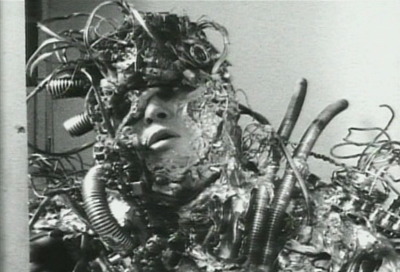
This is yet another movie that was shown as part of EIFF 2012 so the review has been moved, and slightly improved.
Please check it out here.
7/10
If you have enjoyed this, or any other, review on the blog then do consider the following ways to show your appreciation. A subscription/follow costs nothing.
It also costs nothing to like/subscribe to the YouTube channel attached to the podcast I am part of - https://www.youtube.com/channel/UCErkxBO0xds5qd_rhjFgDmA
Or you may have a couple of quid to throw at me, in Ko-fi form - https://ko-fi.com/kevinmatthews
Or Amazon is nice at this time of year - https://www.amazon.co.uk/hz/wishlist/ls/Y1ZUCB13HLJD?ref_=wl_share
Please check it out here.
7/10
If you have enjoyed this, or any other, review on the blog then do consider the following ways to show your appreciation. A subscription/follow costs nothing.
It also costs nothing to like/subscribe to the YouTube channel attached to the podcast I am part of - https://www.youtube.com/channel/UCErkxBO0xds5qd_rhjFgDmA
Or you may have a couple of quid to throw at me, in Ko-fi form - https://ko-fi.com/kevinmatthews
Or Amazon is nice at this time of year - https://www.amazon.co.uk/hz/wishlist/ls/Y1ZUCB13HLJD?ref_=wl_share
Labels:
horror,
japan,
japanese,
movie,
movie review,
sci-fi,
shinya tsukamoto,
tetsuo
Friday, 7 October 2011
Hausu AKA House (1977)
Madder than a bag of rabid badgers all wearing bowler hats, Hausu certainly isn't for all audiences and may turn off just as many horror fans as it manages to please. However, stick with this surreal, groovy, rainbow of supernatural shenanigans and bizarre deaths and you will find that it's not only a rewarding experience but also one that has influenced many other movies (intentionally or not).
The plot sees a young girl, spurning the opportunity to spend time bonding with her father's new love interest, taking a number of her friends to spend time at her aunt's house. The aunt is slightly eccentric and the house certainly has character but nobody realises just quite how much character until events are set in motion that put all of the girls in extreme danger. Because the house is hungry.
With all of the girls being named after their main traits (Kung Fu, Melody, Gorgeous, Fantasy, etc) it quickly becomes clear that Hausu is never aiming for something that's engrossing and believable. It's aiming to create a strange blend of lurid and colourful moments, fun sequences that border on the childish and a number of individual scare moments. If you can imagine an episode of The Monkees set during one particularly memorable Halloween (and, for all I know, they may have produced just such an episode) then you will have an idea of what to expect.
But don't dismiss this film as JUST one successive moment of weirdness after another. There's a bit more to it than that. Okay, so the acting is all quite over the top and the whole vibe may not be palatable to many but director Nobuhiko Ohbayashi, working from a screenplay by Chiho Katsura based on an original story by Chigumi Obayashi (daughter of Nobuhiko), works in a backstory that feeds into the events and also weaves one singular story strand from the start to the final scene that throws many of the visuals and events into question. Or not. You can take this movie in a variety of ways, which is a pleasure that so many of the finer Japanese movies offer. Give it a try.
8/10
EDIT: A rewatch led to me bumping up my rating, and generally loving this a little bit more.
If you have enjoyed this, or any other, review on the blog then do consider the following ways to show your appreciation. A subscription/follow costs nothing.
It also costs nothing to like/subscribe to the YouTube channel attached to the podcast I am part of - https://www.youtube.com/channel/UCErkxBO0xds5qd_rhjFgDmA
Or you may have a couple of quid to throw at me, in Ko-fi form - https://ko-fi.com/kevinmatthews
Or Amazon is nice at this time of year - https://www.amazon.co.uk/hz/wishlist/ls/Y1ZUCB13HLJD?ref_=wl_share
The plot sees a young girl, spurning the opportunity to spend time bonding with her father's new love interest, taking a number of her friends to spend time at her aunt's house. The aunt is slightly eccentric and the house certainly has character but nobody realises just quite how much character until events are set in motion that put all of the girls in extreme danger. Because the house is hungry.
With all of the girls being named after their main traits (Kung Fu, Melody, Gorgeous, Fantasy, etc) it quickly becomes clear that Hausu is never aiming for something that's engrossing and believable. It's aiming to create a strange blend of lurid and colourful moments, fun sequences that border on the childish and a number of individual scare moments. If you can imagine an episode of The Monkees set during one particularly memorable Halloween (and, for all I know, they may have produced just such an episode) then you will have an idea of what to expect.
But don't dismiss this film as JUST one successive moment of weirdness after another. There's a bit more to it than that. Okay, so the acting is all quite over the top and the whole vibe may not be palatable to many but director Nobuhiko Ohbayashi, working from a screenplay by Chiho Katsura based on an original story by Chigumi Obayashi (daughter of Nobuhiko), works in a backstory that feeds into the events and also weaves one singular story strand from the start to the final scene that throws many of the visuals and events into question. Or not. You can take this movie in a variety of ways, which is a pleasure that so many of the finer Japanese movies offer. Give it a try.
8/10
EDIT: A rewatch led to me bumping up my rating, and generally loving this a little bit more.
If you have enjoyed this, or any other, review on the blog then do consider the following ways to show your appreciation. A subscription/follow costs nothing.
It also costs nothing to like/subscribe to the YouTube channel attached to the podcast I am part of - https://www.youtube.com/channel/UCErkxBO0xds5qd_rhjFgDmA
Or you may have a couple of quid to throw at me, in Ko-fi form - https://ko-fi.com/kevinmatthews
Or Amazon is nice at this time of year - https://www.amazon.co.uk/hz/wishlist/ls/Y1ZUCB13HLJD?ref_=wl_share
Labels:
comedy,
ghost,
horror,
japan,
japanese,
movie,
movie review,
nobuhiko ohbayashi
Subscribe to:
Posts (Atom)